
Vietnam's economic landscape in H1 2026 recorded impressive breakthroughs in GDP growth, creating a crucial premise for implementing long-term socio-economic development plans.
Vietnam's economic landscape in the first half of 2026 recorded impressive breakthroughs in GDP growth, creating a crucial premise for implementing long-term socio-economic development plans. Nevertheless, the economy continues to face numerous challenges amidst the complex and ongoing fluctuations in both the global and domestic contexts.

Trade & Import-Export Landscape
In H1 2026, the economy recorded a GDP growth rate of 8.18%, marking the highest semi-annual growth since 2000. Trade scale experienced a robust breakthrough, with total import-export turnover surging by 27.1% year-on-year. Notably, the processing and manufacturing industry remained a solid pillar, accounting for up to 90% of total export turnover. Regarding the import structure, production materials such as machinery, equipment, and raw materials made up 94.1%, signaling that enterprises are actively expanding production to meet future orders.
Dr. Pham Anh Tuan, Deputy Director of the Institute of Vietnam and World Economy, pointed out that the trade deficit in the first six months reached a staggering $16.65 billion. To achieve the goal of maintaining an average surplus of $24 billion per year as seen in the previous period, the economy faces immense pressure to generate a surplus of over $40 billion in the latter half of the year.
Furthermore, the export growth rate of the FDI sector averaged 16.4% annually, far exceeding the 11.4% rate of domestic enterprises. This indicates that while trade scale is expanding, the economy remains heavily reliant on the foreign sector, and the improvement of domestic technological capacity is still sluggish.

Credit Pressure & Financial System Risks
The credit system continues to act as the lifeblood of the economy, with outstanding loans reaching 19.97 quadrillion VND, representing an increase of 7.41% year-to-date and 18.1% year-on-year. Basic macroeconomic indicators were well-maintained; inflation was anchored at 4.38%, closely tracking the National Assembly's 4.5% target, and the Vietnamese Dong remained stable with a depreciation of only 0.16%.
Despite this, Dr. Pham Xuan Hoe, former Deputy Director of the Banking Strategy Institute, highlighted a severe imbalance between mobilization and lending. Specifically, while credit grew strongly, total mobilized capital increased by only about 3%. This discrepancy drove the loan-to-deposit ratio (LDR) to 115%, which is 30% above the safety threshold. Short-term capital used to finance medium and long-term loans has soared to 5.9 quadrillion VND, creating significant liquidity pressure and pushing mobilization interest rates at some smaller banks to 9% per year for 12-month terms.
Experts propose a comprehensive restructuring of the financial system to reduce reliance on bank credit and unclog the bond and stock markets. Additionally, the State Bank of Vietnam must closely monitor liquidity risks rather than sacrificing systemic safety for short-term growth targets.

Budget Revenue - Expenditure and Public Investment
The market witnessed a positive shift in the investment structure, with strong capital inflows from the private sector serving as a pillar for growth targets amidst difficulties in other resources. The Purchasing Managers' Index (PMI) in June 2026 reached 51.8 points, marking the 12th consecutive month above the 50-point threshold. However, public investment disbursement revealed significant bottlenecks in Q2 2026, with the disbursement rate notably lower than the same period in 2025.
Assoc. Prof. Dr. Vu Sy Cuong, a Senior Lecturer at the Academy of Finance, attributed the root cause to the temporary repercussions of the merger and restructuring of local administrative units, which severely disrupted the capital approval and allocation process. Experts suggest the urgent need for a specialized mechanism and decisive directives from the Central Government to clear procedural bottlenecks and concentrate efforts on accelerating disbursement in Q3 and Q4. This will turn public investment into a genuine driver to offset the shortfall of the first half.
Resilience of the Business Community
Business confidence and entrepreneurial spirit have been well-maintained in the market. Statistics show that the number of newly registered and reactivated businesses reached 169,842 units, up 11.2%. Notably, total newly registered capital hit 1.35 quadrillion VND, a 64.8% increase, bringing the average capital per enterprise to 12.22 billion VND, significantly higher than the 9 billion VND recorded in 2025.
However, Mr. Pham Ngoc Thach, Deputy Head of the Legal Department at VCCI, assessed that the intrinsic resilience of existing enterprises is extremely fragile. The number of businesses withdrawing from the market reached a record high of 151,067, up 18.8%, with nearly 86,000 businesses temporarily suspending operations. The fact that the "death" rate surpassed the "birth" rate is the consequence of cost-push pressures, global supply chain disruptions, and the burden of legal compliance costs.
Recommendations point toward shifting to a development-enabling mindset, implementing institutional reforms, and drastically cutting unnecessary cost barriers to create a survival and recovery space for the business community.
Real Estate Market Landscape
As a backbone sector accounting for about 10–20% of the national GDP, the real estate market noted a recovery in supply after a prolonged period of stagnation. In the first six months, developers injected approximately 98,000 products into the market—an increase of over 50% compared to 2025—with an estimated equivalent capital volume of up to half a quadrillion VND.
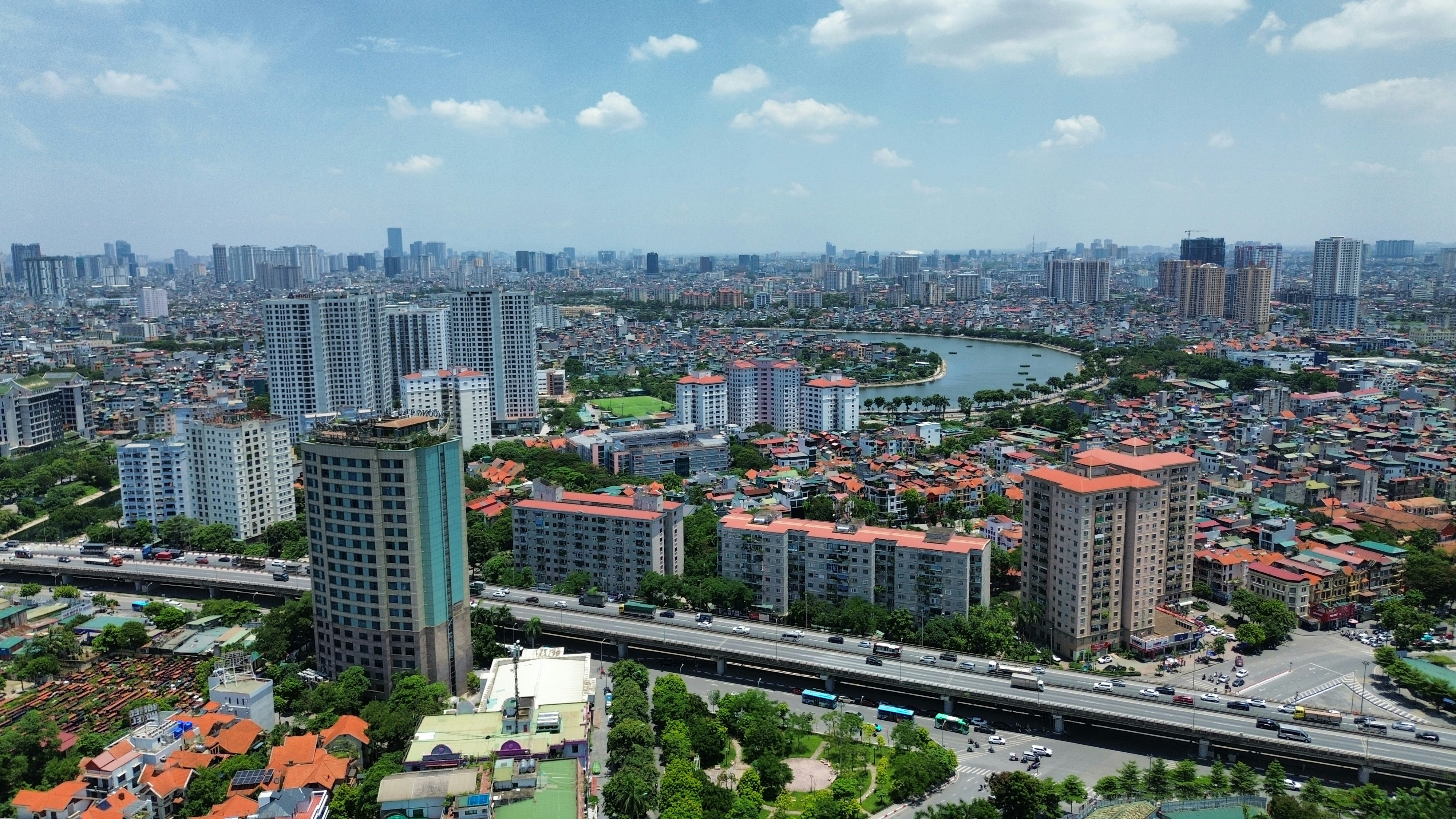
Nevertheless, Dr. Nguyen Van Dinh, Vice President of the Vietnam National Real Estate Association, warned that market demand is showing signs of severe stagnation. The number of absorbed products only reached about 40,000 units, translating to an absorption rate of below 50%. This is an alarming drop compared to the same period in 2025, when absorption rates frequently reached 80-90%. The weakening demand is locking up the cash flow of real estate developers.
To address this challenge, experts recommend that the market restructure its product segments, focusing on social housing and industrial real estate to attract real cash flow. This should be combined with supportive policies to help homebuyers access credit at reasonable costs, thereby stimulating demand.
Overall, Vietnam's economic landscape in the first half of 2026 has demonstrated strong resilience alongside positive recovery signals across several key sectors. However, to maintain sustainable growth momentum and achieve the strategic targets for the entire year, urgently removing institutional bottlenecks, unclogging capital flows, and reviving domestic demand will be the central tasks in the coming period.